What Are Laminate Doors? Types, Benefits, Designs and How to Choose the Right One
Laminate, laminated or mica doors — the printed skin you touch every day, and the hidden core that decides how long the door lasts.
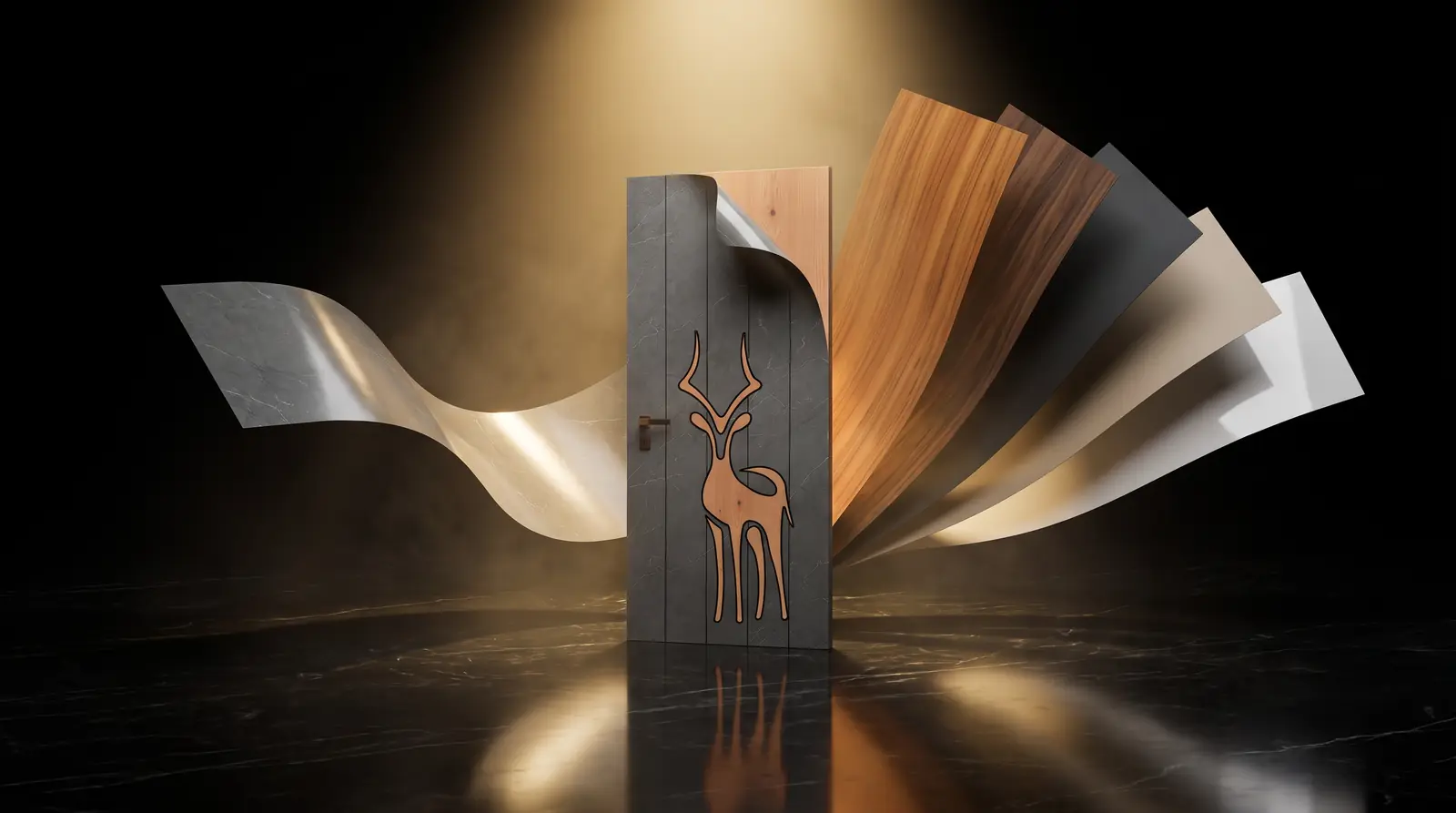
The part of a laminate door you touch every day is a thin printed sheet. Underneath it sits a much heavier door, and that hidden part decides how long the door lasts. Most buyers pick the surface first and never ask about the rest. This guide fixes that.
A laminate door — also called a laminated door or mica door — is a flush door with a decorative laminate sheet bonded to both faces. The laminate gives it a ready-made, easy-clean finish in wood grain, plain colours or gloss; the core inside decides its strength and lifespan.
Getting it wrong is expensive, because swapping doors in a finished home means new hinges, touch-ups and a lot of dust. You will learn what laminate doors are, the main types, why people choose them and what shapes the price. Later sections cover how to pick one for a bedroom or bathroom, and where to see samples in Bangalore and beyond. WudGres makes laminate doors near Bengaluru, so the advice here reflects how these doors are actually built.
In this article
So what is a laminate door, really?
A laminate door is a flush door with a decorative laminate sheet bonded to both faces. The sheet is made from printed paper laid over several layers of kraft paper. Heat and resin press these layers into one hard, flat skin. The printed layer can copy wood grain or carry a plain colour or pattern.
You will also hear them called laminated doors, mica doors or sunmica doors. They all mean the same thing: a door finished with decorative laminate.
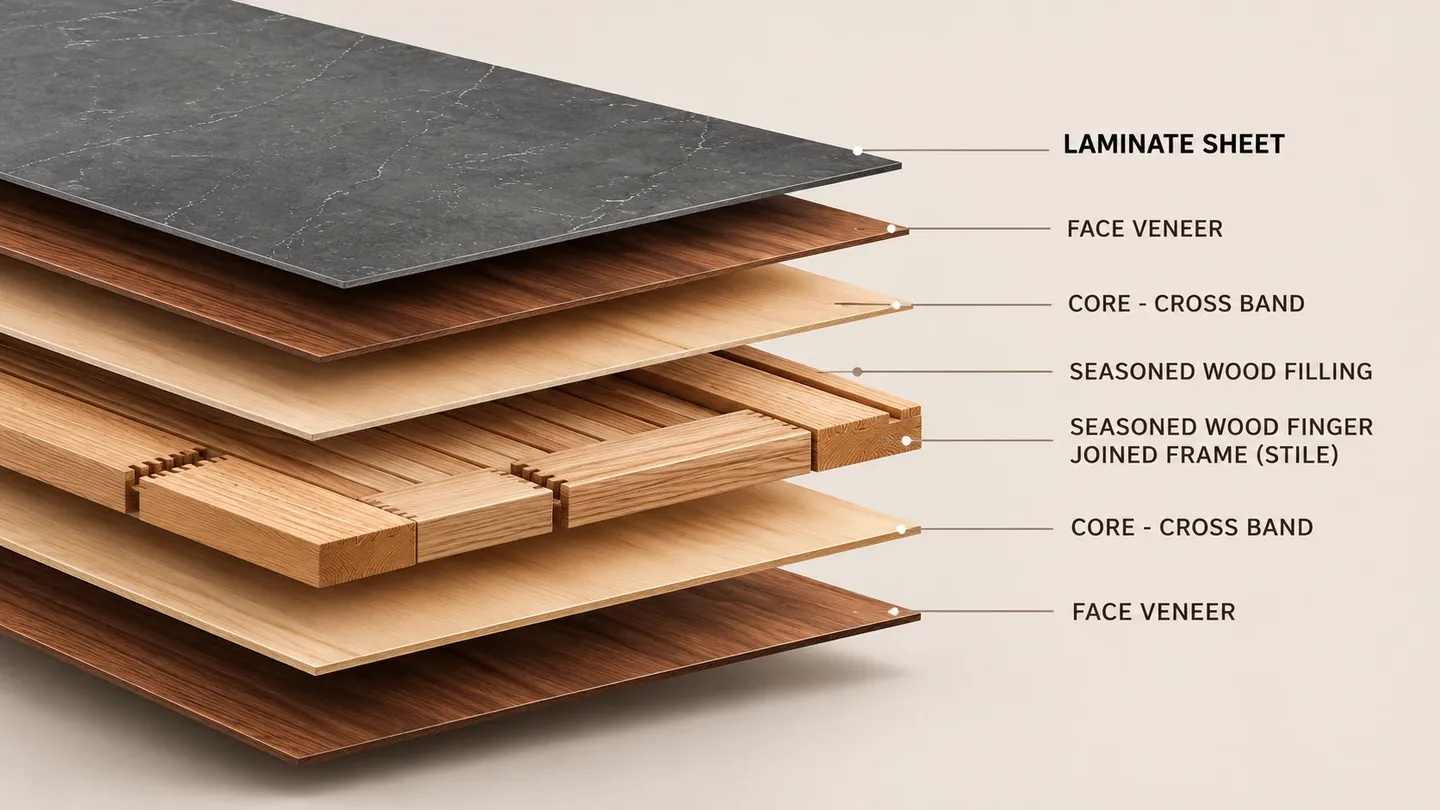
Under that skin sits the core, and this is where doors differ most. A typical flush door has plywood faces over a hardwood frame filled with solid battens. Two laminate doors can look identical in a showroom and still weigh and age very differently.
That is why laminate describes the surface, not the wood inside. Choose the finish you love, then ask what lies beneath it.
A veneer door wears a thin slice of real wood, and a painted door wears a coat of paint. Laminate is different because the skin is a factory-printed sheet, not wood or paint.
The edges of the door deserve a close look too. A finishing strip covers the sides so the core stays hidden. Check these edges on any sample, because this is where cheaper doors tend to fail first.
One practical bonus is that the finish arrives ready to use. Nobody has to paint, polish or varnish a laminate door, so there is no refinishing cycle every few years.
WudGres sells its laminate doors as the Lamorous series. Each door carries a design code, such as WG 801 or WG 4002, so matching doors across rooms is simple.
What types of laminate doors can you buy?
Laminate flush doors are the standard choice. They have a flat face on both sides, with no panels and no raised edges to collect dust. That simple shape suits apartments, villas and offices alike.
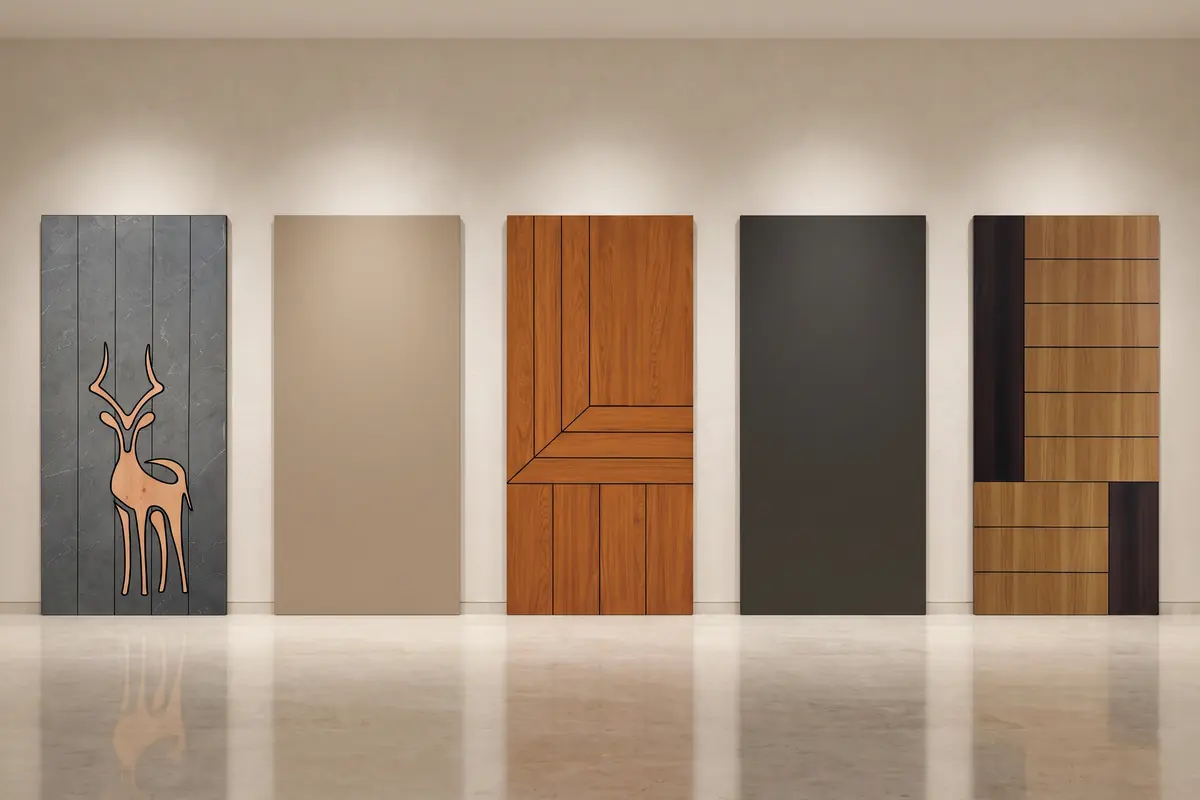
Finish is the next big difference. Wood-grain laminates copy teak, walnut or oak, and they hide everyday marks well. Plain colour laminates give a calm, modern look, though dark shades show fingerprints more. High-gloss laminates bounce light around a room but need more frequent wiping.
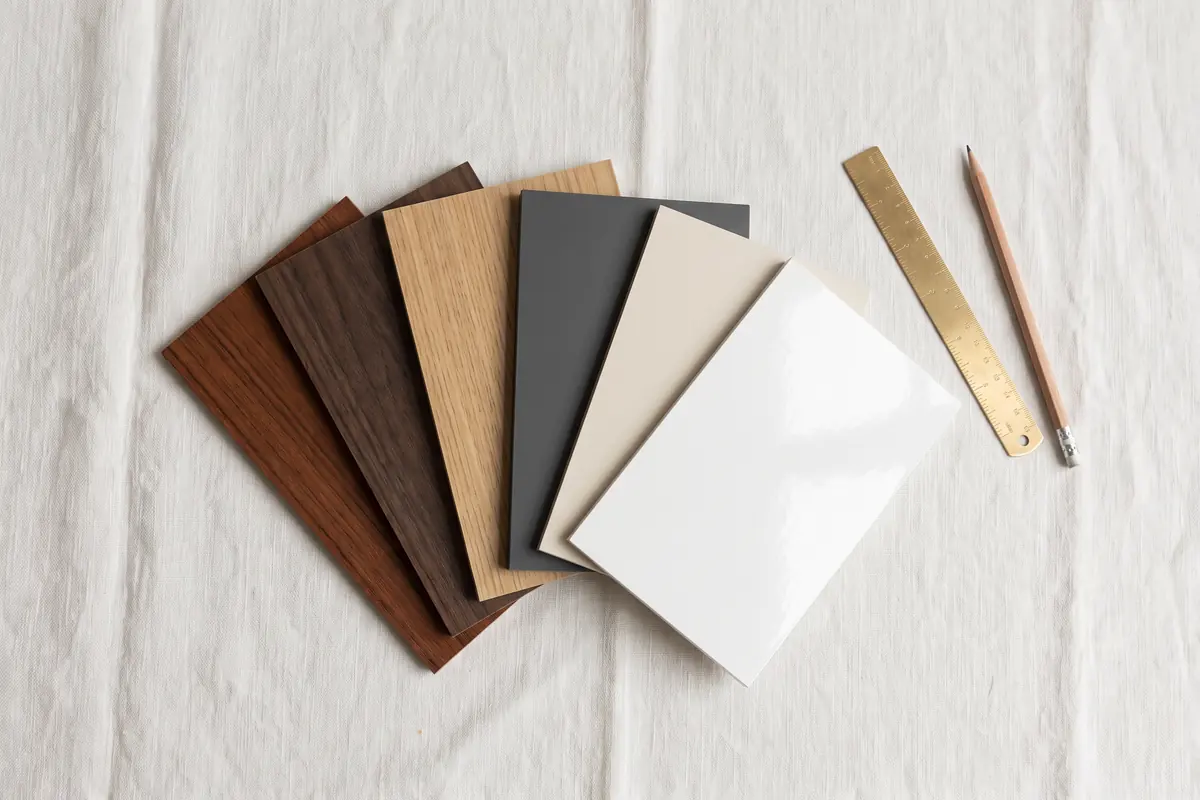
Surface texture is a separate choice as well. A smooth finish wipes clean in seconds, while a textured laminate feels closer to real wood and hides light scratches.
Some laminate doors add vertical grooves or a two-tone split to the flat face. Those lines break up a big surface and give a plain room more character.
Lamorous doors also differ in how the back is finished. One option is a design on one side with a membrane back, which is a thin film finish. A second keeps the design on one side with a plain laminate back. A third puts the design on both faces, which suits doors seen from both rooms.
Thickness also changes how a door feels. A thicker door feels heavier and more solid in the hand, while a thinner one costs less and swings lighter. Lamorous doors come in 32, 35 and 40 mm.
Measure the opening before you fall for a design. Trimming a laminate door on site can expose the core along the cut. Doors with a membrane back top out at 87 inches tall and 44 inches wide, so check taller or wider openings early against the WudGres size table.
The frame deserves a thought as well. Matching its finish to the door makes the whole opening read as one clean piece.
Elite, Rich, Prime and Eco: the four Lamorous ranges
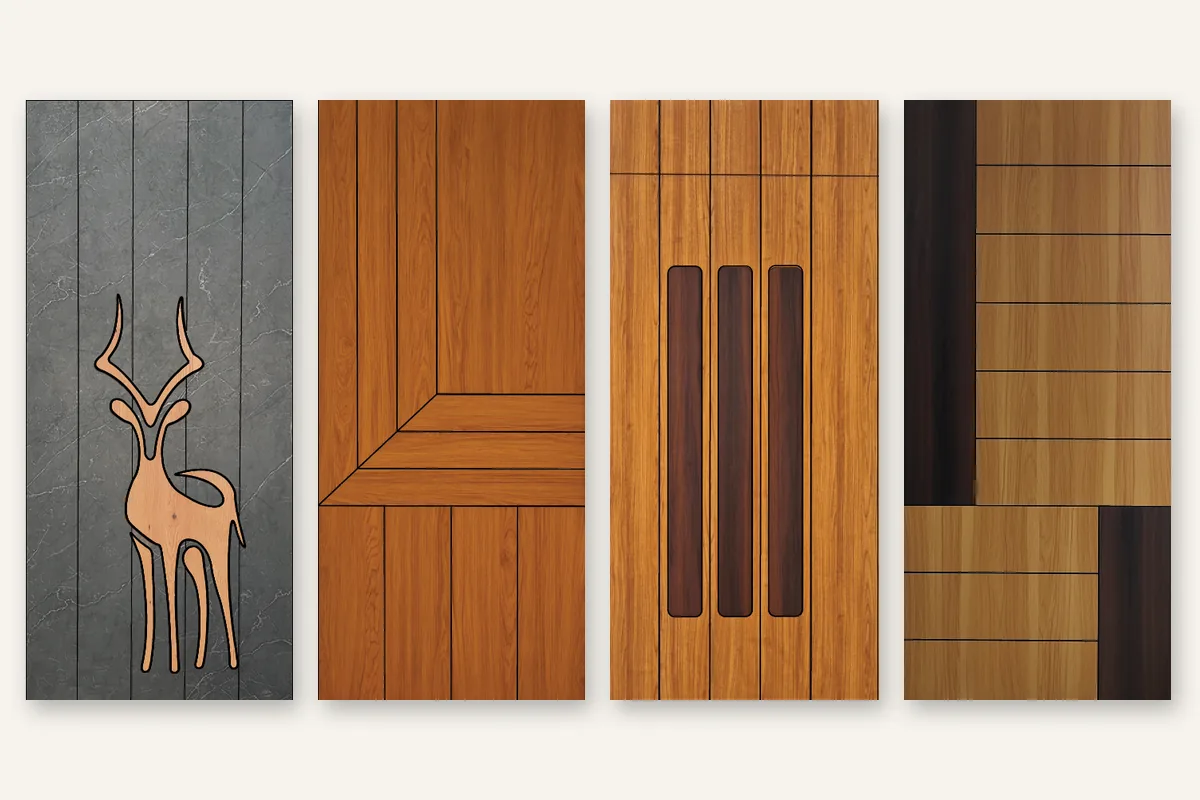
Line up four Lamorous doors and your eyes can’t tell them apart. Your hands can. Two of them carry a 1 mm textured laminate made with imported paper, so your fingers find actual grain. The other two carry a 0.82 mm smooth laminate in the same wood tones. Then add one more question: is the door itself embossed, or flat?
| Embossed door | Flat door | |
|---|---|---|
| 1 mm textured laminate | Elite | Rich |
| 0.82 mm smooth laminate | Prime | Eco |
Four ranges, four completely different jobs. Eco is the most budget-friendly, Elite the most premium, and Rich and Prime sit between them.
Everybody chooses with their eyes. Come and choose with your hand.
Why do people choose laminate doors?
Picture a child’s bedroom door after two years of backpacks, scooter handles and sticky fingers. A painted door shows every mark and needs sanding plus a fresh coat. Laminate usually needs nothing more than a damp cloth.
Consistency is the second reason buyers give. Natural veneer varies from door to door because every slice of wood has its own grain. A printed laminate repeats the same pattern, so ten doors in a flat look like a set.
Cost matters too, and laminate usually comes in below solid timber or real veneer. That saving grows quickly when you are fitting every room in a house. The trade-off is repair, because a chipped laminate corner cannot be sanded back the way wood can.
Installation also tends to go faster on site. The door arrives finished, so nobody waits for paint to dry or sweeps up sanding dust from a new floor.
Moisture and insect resistance also draw buyers in, though these depend on the core, not the laminate. Ask what the core is made of and how it is bonded before you trust any claim.
Choice is the last reason, and laminate offers plenty of it. You can find shades and patterns that real wood simply does not grow, from soft grey to deep charcoal.
What do laminate door designs look like today?
Wood-grain designs remain a favourite for good reason. Walnut, teak and oak tones suit many Indian homes because they pair easily with wooden floors and warm walls.
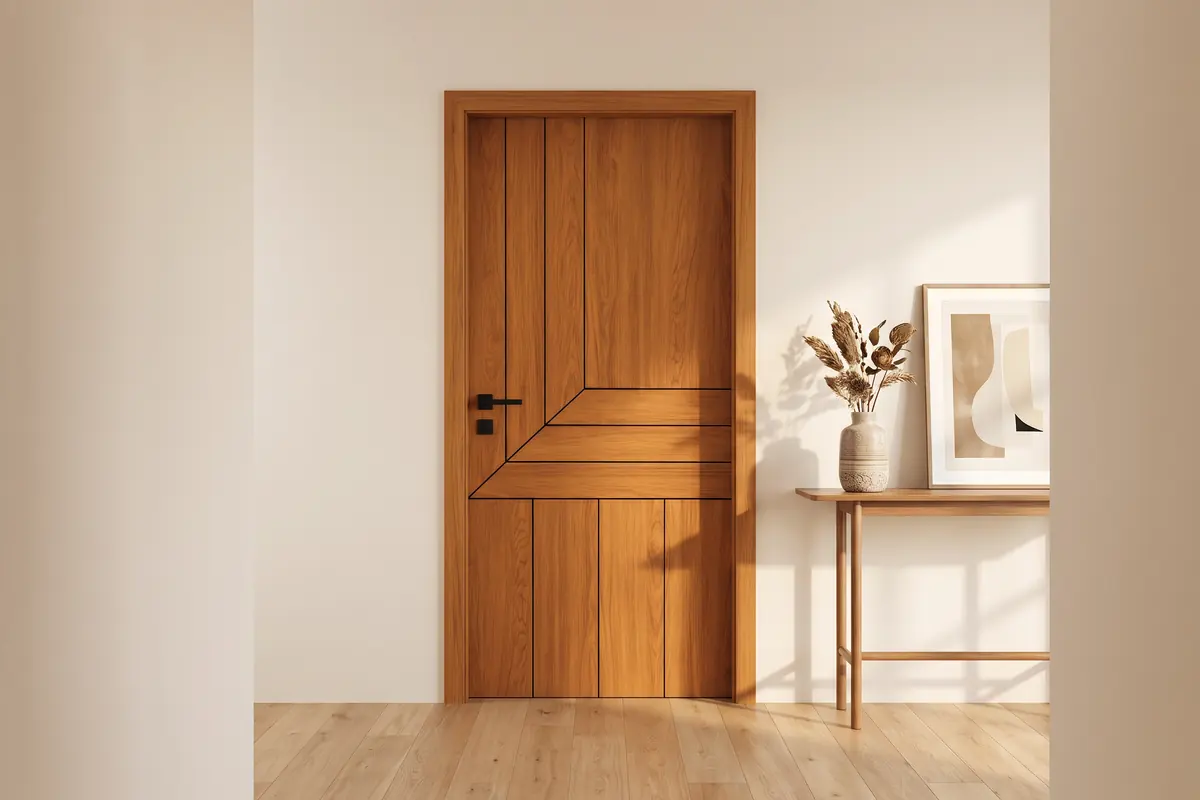
Modern laminate door designs head in a cleaner direction. Think of matte plain colours, slim vertical grooves and bold pairings like black with warm wood. These work well in compact apartments, where a quiet door keeps a small room feeling calm.
Shade changes the feel of a room too. Light shades such as white, beige and pale oak make small rooms feel larger. Dark shades such as walnut and charcoal add depth, but they show dust and scratches sooner.
In bedrooms, soft matte finishes and calm wood tones help a room feel restful. Hallways and living areas can carry bolder grain or a darker shade with more presence.
A simple rule helps when you match a door to the floor. Keep the door a shade or two lighter or darker than the floor. An exact match can look flat, and a near miss in undertone can look like a mistake.
Handles can change the look of a door as much as the laminate does. Slim black handles suit modern designs, while brass pulls sit better against warm wood tones.
The Lamorous ranges are a handy place to look for ideas, and the catalogue shows every design code in full. Eco and Rich show how natural grain looks on a clean flat door. Elite designs such as WG 4002 add a statement motif, while Prime designs such as WG 4507 pair vertical grooves with inlaid panels.
Commercial interiors lean toward quieter choices. Offices, clinics and hotels usually want one finish repeated along a long corridor, so subtle grain and plain colours win. Uniform doors also make a building feel organised before anyone reads a sign.
How much does a laminate door cost?
Laminate door price depends on six things. The core matters most, followed by thickness, laminate quality, size, finish and the frame. A heavier core in a thicker door costs more to make, and a taller door uses more material.
Lamorous doors are priced per square foot, and the rate shifts with the range, the thickness and the back finish. You can see the current rates in the price list on the WudGres catalogue page or in the WudGres app, or contact the team for a quote.
Veneer doors usually cost more than laminate, because real wood slices are scarcer and need careful finishing. That gap is why many buyers compare laminate doors vs veneer doors before deciding.
Compare quotes on the same terms, or the numbers will mislead you. A low price per door can hide extra charges for frames, hardware cutouts or fitting. Ask every supplier to quote the same size, thickness and frame.
Cheaper is not always worse, and dearer is not always better. A mid-priced door with a solid, well-bonded core can outlast a cheap one that sags in two years. Judge value across ten years, not at the cash counter.
How do you pick the right one?
Start with the room you are fitting. Laminate doors for bedrooms should feel solid and close with a quiet thud, since privacy matters most there. A thicker door with a solid core helps, and a tight frame stops light and noise leaking through gaps.
Bathrooms and kitchens call for more caution. Water and steam are hard on any door, so ask for a moisture-ready core and sealed edges. A pretty surface alone will not protect the wood inside — for wet areas, look at fully waterproof NFC doors (see our guide to what NFC doors are).
Main entrance doors face the most wear, sun and rain. WudGres positions its Lamorous laminate doors for interior spaces, so ask before using one on an exposed entrance.
Think about who uses the door. A busy family home needs a tougher, easier-to-clean finish, while a guest room can carry a paler, fussier shade.
Five questions tell you most of what you need to know:
- What is the core made of?The core, not the laminate, decides strength, weight and lifespan.
- How thick is the door?Lamorous doors come in 32, 35 and 40 mm; thicker feels more solid.
- How are the edges sealed?Edges are where cheaper laminate doors fail first.
- What does the warranty cover?WudGres doors carry a three-year limited warranty.
- Can I see a physical sample?Screens and showroom lights shift colour. Feel the texture in person.
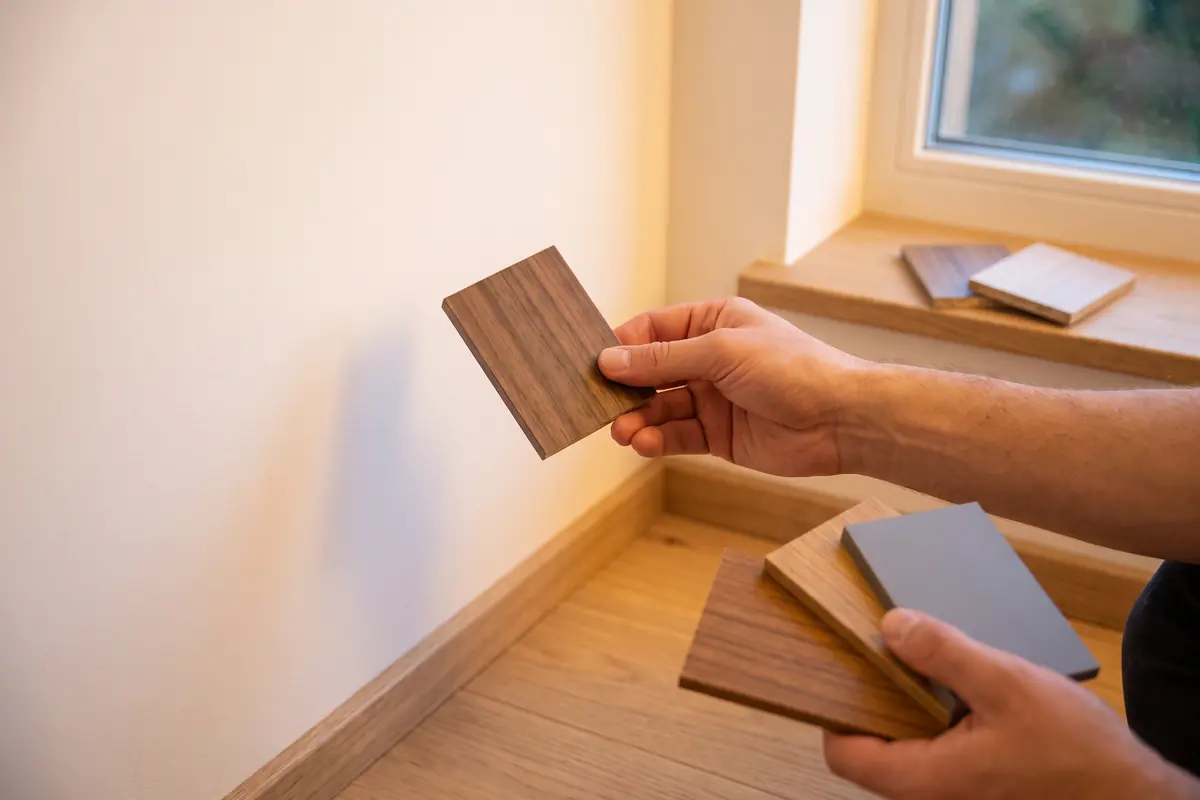
Choosing from a catalogue photo is an easy mistake to make. Screens shift colour, and showroom lights look nothing like the light in your bedroom. Hold a sample against your wall and floor at the time of day you use the room most.
Fitting a whole home or office changes the plan slightly. Order every door in one go from one supplier, so the shade stays consistent across the building. Mixed batches can show small colour differences that look obvious side by side.
Where can you buy laminate doors in Bangalore and beyond?
A local maker gives you things a catalogue cannot. You can visit, touch a sample, check the edges and ask questions face to face. After the sale, you also know exactly who to call if a door needs adjusting.
WudGres runs two units near Bengaluru, in Chikkabanavara and Nelamangala. Its studios and partner outlets let you see finishes in person across Karnataka, Tamil Nadu, Andhra Pradesh and Goa. Karnataka has the most of them, with plenty in and around Bengaluru.
Sizes, finishes, hardware and profiles can be tailored to your project, which helps with non-standard openings. Guided selection and after-sales support are part of the service as well. You can contact the team with your project details.
There is a sustainability angle too. WudGres belongs to Diwani Group, which makes products from leftover sawmill wood that would usually be burned as firewood. Doors built to last also mean fewer replacements and less wood used over time.
Before you visit, download the WudGres catalogue and note the design codes you like. Bring your door sizes and a photo of each room. Handling a real sample for a few minutes tells you more than ten product photos.
Laminate door FAQs
Is a mica door the same as a laminate door?
Yes. Mica, sunmica, laminated and laminate doors all describe the same thing: a flush door with a decorative laminate sheet bonded to its faces. “Mica” or “sunmica” is simply the everyday name many people in India use for decorative laminate.
Which is better, laminate doors or veneer doors?
Laminate doors cost less, need no polishing and look the same from door to door, so they suit busy homes and whole-house fits. Veneer doors carry real wood that can be sanded and re-polished, so they suit buyers who want natural grain and a premium feel.
Are laminate doors waterproof?
The laminate surface itself shrugs off splashes and wipes clean, but water resistance depends on the core and on sealed edges. For bathrooms and other wet areas, a fully waterproof NFC door is the safer choice.
Are laminate doors termite-proof?
Termites do not eat the laminate skin, but they can attack an untreated wooden core. Ask how the core is treated and bonded before you trust any termite claim.
How long do laminate doors last?
A laminate door with a solid, well-bonded core can serve a home for many years with basic care. The finish never needs repainting or re-polishing. WudGres doors are also backed by a three-year limited warranty.
What is the price of a laminate door?
Lamorous laminate doors are priced per square foot. The rate depends on the range (Eco, Prime, Rich or Elite), the door thickness and the back finish. Check the current WudGres price list or contact the team for a quote.
How do you clean a laminate door?
Wipe it with a soft, damp cloth and a little mild soap, then dry it. Avoid abrasive scrubbers, steel wool and harsh solvents, which can dull the surface or scratch high-gloss finishes.
Can a scratched or chipped laminate door be repaired?
Small scratches and chips can be filled with a colour-matched laminate repair wax or filler. Unlike a veneer door, the surface cannot be sanded back and refinished, so choose a textured or wood-grain finish if the door will take heavy wear.
What thickness should a laminate door be?
Lamorous laminate doors come in 32, 35 and 40 mm. Thicker doors feel more solid and block more sound, which suits bedrooms; thinner doors cost less and swing lighter.
What is the difference between laminate and membrane doors?
A laminate door has a hard, pressed laminate sheet bonded to a flat face. A membrane door has a thin PVC film vacuum-pressed over a routed board, so the film can follow carved profiles.
Can laminate doors be used as main doors?
WudGres positions its Lamorous laminate doors for interior spaces such as bedrooms, living areas and offices. For an exposed main entrance that faces sun and rain, ask the team before choosing a laminate door.
Where do you go from here?
A laminate door is a decorative skin over a hidden core, and both halves deserve attention. The finish decides how the door looks, and the core decides how long it lasts. You touch a door dozens of times a day, so the small details are worth the extra thought.
Choose the room first, then the finish, then ask hard questions about what sits inside. Compare quotes on equal terms and check a sample in your own light. When you are ready, browse the Lamorous laminate doors online or visit a WudGres studio near you and see the Lamorous series in person.