Laminate Doors vs Veneer Doors: Which Is Better for Your Home?
From three feet away they can look the same. Ten years later, they have aged in completely different ways. Here is how to choose.

Stand three feet back and a laminate door and a veneer door can look almost identical. Give them ten years of daily use, and they age in very different ways. That gap matters more than the showroom look, because you live with the door long after the first impression fades.
Choose laminate for low-maintenance, matching doors in bedrooms, kids’ rooms and corridors — it wipes clean, needs no polish and costs less in designer ranges. Choose veneer where real wood grain matters, such as a foyer or living-room feature door — it can be sanded and re-polished but needs more care. Many homes use both.
WudGres makes both finishes, so this guide gives each one a fair hearing. You will see how laminate doors vs veneer doors compare on looks, durability, price and the rooms they suit. We also use real WudGres ranges as examples, so you can see each choice in a finished door. By the end, you should know which one fits your home or project.
In this article
What is the real difference between laminate and veneer?
Laminate is a factory-printed sheet made from decorative paper and resin, pressed into a hard skin. Veneer is a thin slice of real wood, glued onto the face of the door. One is made to look like wood, and the other is wood. (If you have heard the term “mica door”, that is laminate too.)
Both finishes are skins laid over a core, so the core matters equally in each. A beautiful surface on a weak core still sags, warps or dents. Ask about what sits underneath before you compare anything else — our guides to laminate doors and veneer doors show what each door looks like inside.
The same flush door shape can carry either finish, which is why buyers compare them at all. Layout, thickness and frame often match, so the finish becomes the main choice.
Species and cut change how veneer looks. Teak, for example, shows straight, warm grain that many buyers associate with quality joinery.
Veneer demands more care from the maker. Each slice of wood must be chosen, matched for grain and pressed flat. Laminate, on the other hand, is a controlled product. Every sheet from a batch carries the same pattern, which is why laminate doors in a set match so closely.
WudGres sells laminate under the Lamorous name, and veneer under Ven Decor and Teak Veneer. Ven Decor has four ranges called Legend, Lavish, Elite and Rich, while Lamorous has Elite, Rich, Prime and Eco.
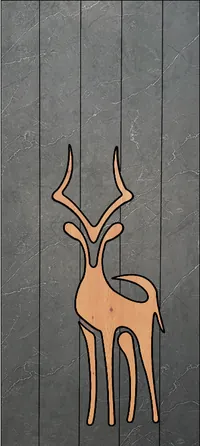 Elite
 Rich
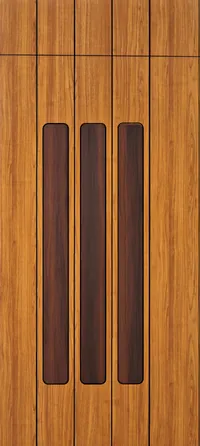 Prime
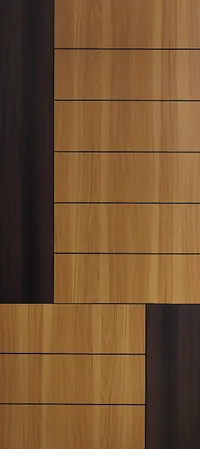 Eco
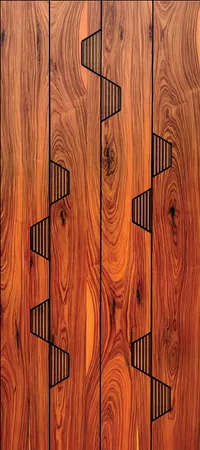 Legend
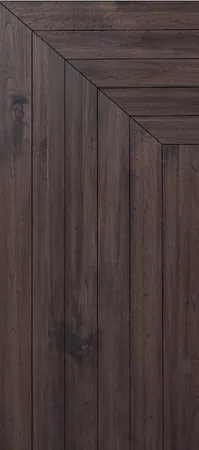 Lavish
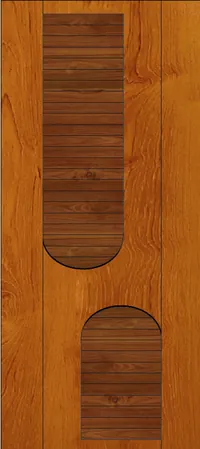 Elite
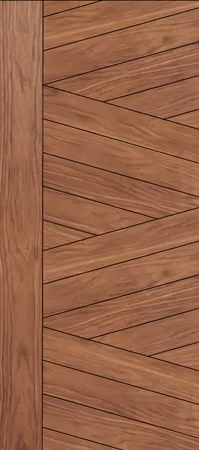 Rich
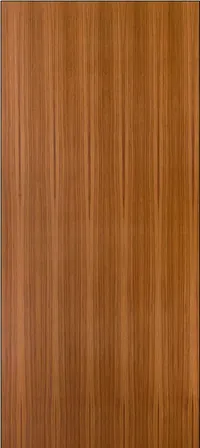 Teak
Same name, different door. “Elite” and “Rich” exist in both families. A veneer Rich and a laminate Rich are different doors at different prices, so always check which finish a design belongs to before you compare quotes.
Thickness differs too, with Ven Decor at 35 and 38 mm and Teak Veneer at 32, 35 and 40 mm. Doors in the Ven Decor series can carry a design on one side with a membrane back or a 0.8 mm laminate back. A design on both sides is also available.
Laminate vs veneer doors: side-by-side comparison
The table below sums up the main differences before we go deeper.
| Laminate | Veneer | |
|---|---|---|
| What it is | Printed paper and resin sheet | Thin slice of real wood |
| Look | Same pattern on every door | Natural grain that varies from door to door |
| Feel | Smooth, or textured to mimic grain | Real pores and depth under your fingers |
| Everyday marks | Wipes clean with a damp cloth | Soft cloth and an occasional polish |
| Repair | A chipped corner cannot be sanded back | Light scratches can be sanded and polished |
| Sunlight | Tone stays more stable | Can darken or fade over the years |
| On arrival | Finished and ready to use | Arrives raw — polish after fitting |
| Price at WudGres | Lower in matching designer ranges | Higher in designer ranges; plain teak sits close to laminate |
| Best for | Bedrooms, kids’ rooms, corridors, rentals | Feature doors, foyers, reception areas |
| WudGres range | Lamorous | Ven Decor and Teak Veneer |
How do they look and feel up close?
Grain is the first thing most people notice. Veneer varies from door to door, because every slice of wood has its own pattern and tone. Laminate repeats the same print, so ten doors in a flat look like a matched set.
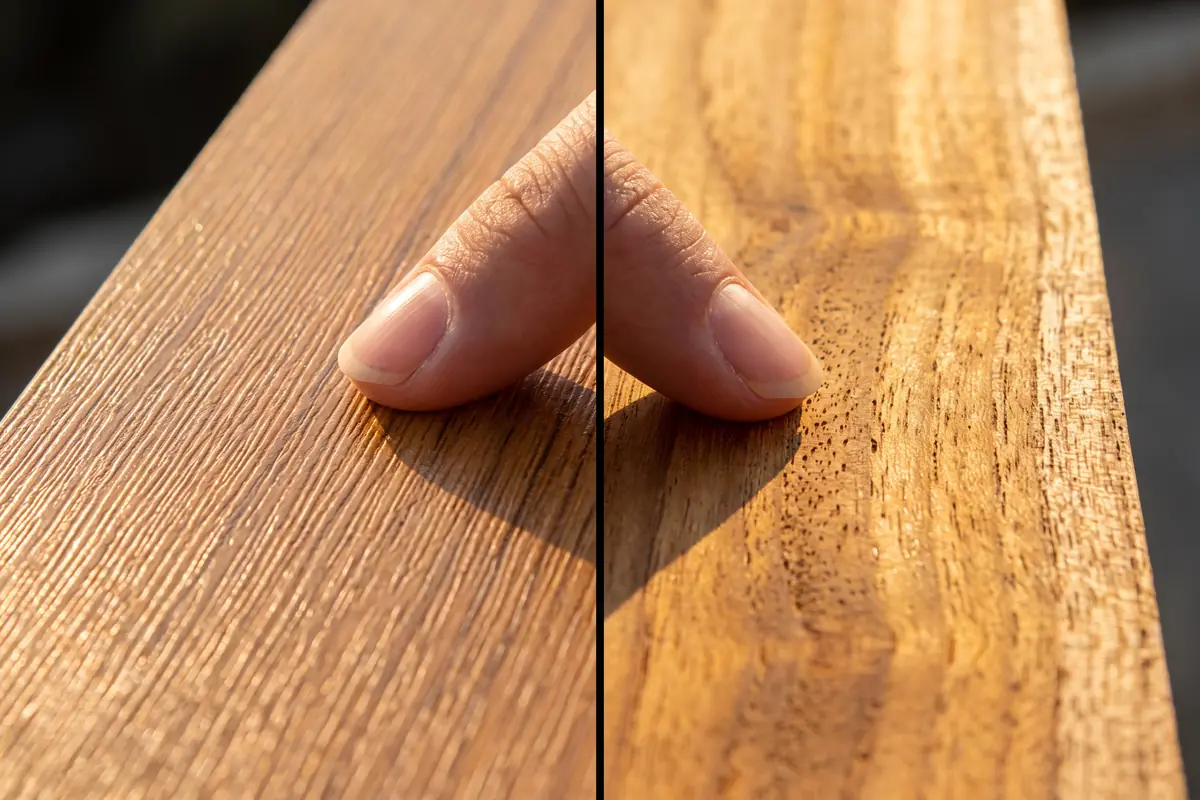
Veneer feels like wood because it is wood. You can see depth in the grain and sometimes feel it under your fingers. Textured laminate gets close, but a trained eye can usually tell the difference up close.
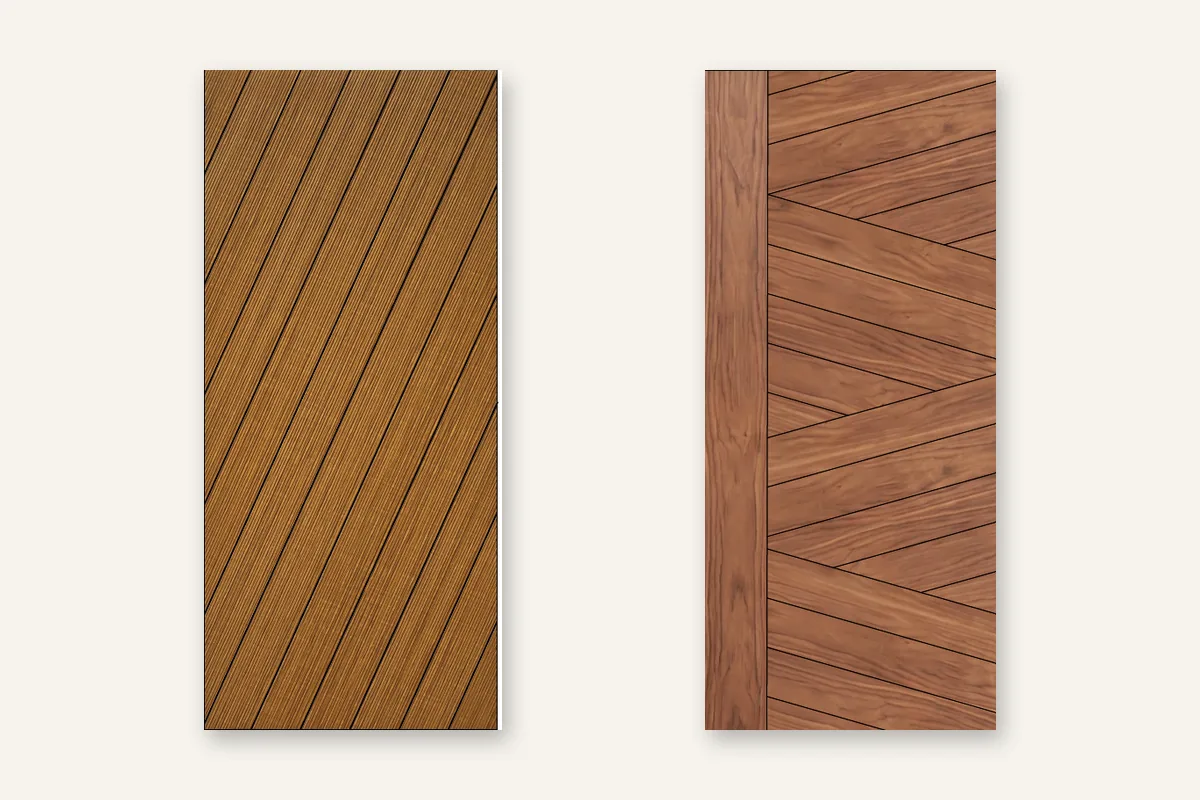
The two Rich ranges offer a handy test. Lamorous Rich WG 801 and Ven Decor Rich WG 924 both run on a diagonal layout, one in laminate and one in real wood. Stand them side by side and the grain gives the game away.
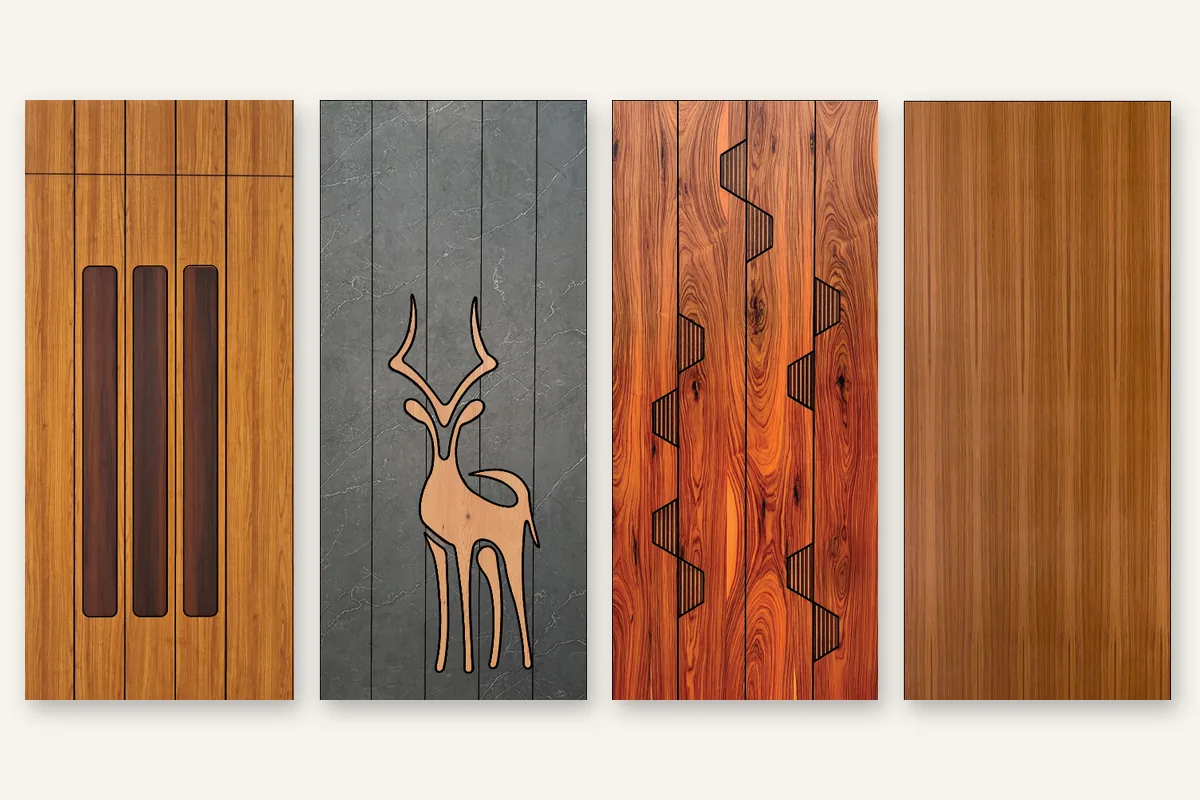
Laminate can do things wood cannot. Prime designs such as WG 4507 pair vertical grooves with inlaid panels, and Elite designs such as WG 4002 add a statement motif in a contrasting tone.
Modern laminate door designs also include plain matte colours that no tree produces. Ven Decor works the other way, adding cut-in patterns to real wood, like the dark zig-zag inlay in Legend WG 5004. Teak Veneer doors keep the look simple: they come plain or grooved, so the wood grain does most of the talking.
Natural variation can surprise first-time buyers. Two veneer doors from the same range may differ slightly in tone, so ask to see the actual door before you order.
Light changes the story as well. In a small bedroom, a pale laminate or light wood tone can make the room feel larger. A deep, warm veneer adds drama in a big hall.
From across a room, a good wood-grain laminate and a plain veneer are hard to separate. Up close, grain depth and natural variation usually settle it.
Which one lasts longer in daily use?
Think of a busy family hallway. Backpacks scrape the door, wet hands leave marks, and afternoon sun hits one side for hours. Each finish handles that punishment differently.
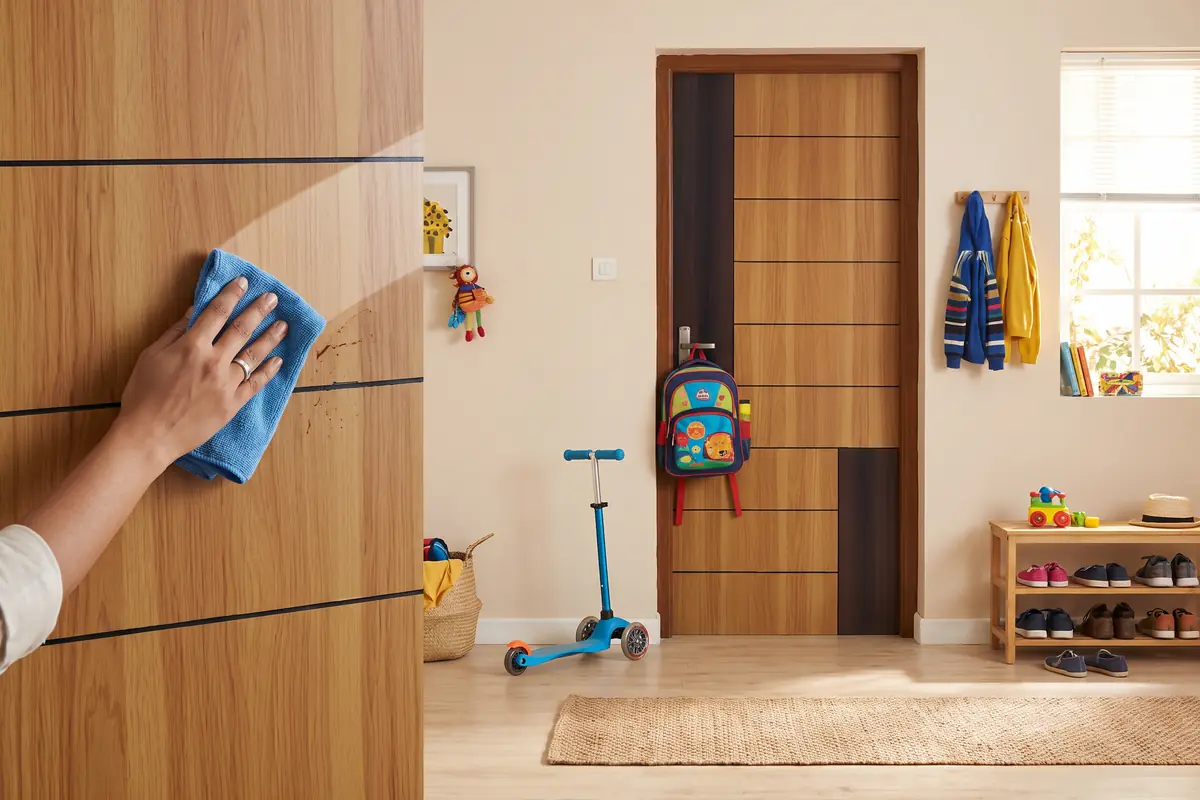
Laminate resists everyday marks well and wipes clean with a damp cloth. Its pattern is consistent from door to door and needs no polish. The weak point is the edge or corner, because a chip there cannot be sanded away.
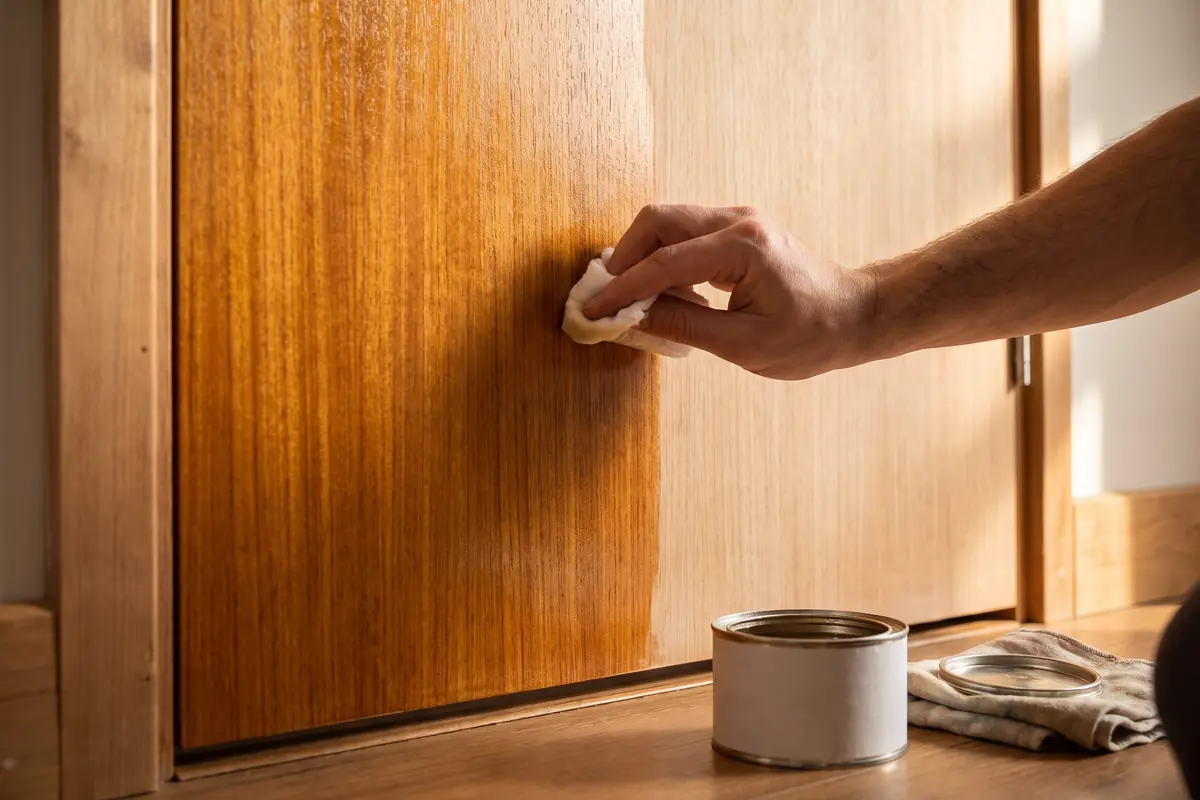
Veneer is easier to repair, because wood can be sanded and polished again. Light scratches can often be sanded out and polished over. Veneer is thin, though, so there is little room for deep repairs. Real wood can also darken or fade in strong sun.
WudGres veneer doors — Ven Decor and Teak Veneer — are supplied in a raw finish, so plan on polishing them after fitting. WudGres describes teak as naturally resistant to warping, decay and pests thanks to its natural oils. Laminate arrives finished and needs no polishing at all.
Here is what ten years of upkeep looks like for each:
Cleaning habits differ between the two as well. Laminate takes a damp cloth without complaint. Veneer prefers a soft cloth and an occasional polish, because harsh cleaners can dull the finish. The WudGres care and finishing guide covers both.
Edges deserve the same check on both. A sealed edge keeps moisture out of the core, and a poorly sealed one lets it in.
Whichever finish you pick, the core decides how long the door really lasts.
A solid, well-bonded core outlasts a weak one under either skin, so ask to see how the door is built — and what the warranty covers.
How do laminate door price and veneer door price compare?
Both finishes at WudGres are priced per square foot. The rate shifts with the range, the thickness and the back finish. No single number tells you which finish costs less.
Indicative only, not to scale. Every WudGres door is priced per square foot; the exact rate depends on range, thickness and back finish.
In matching ranges, designer veneer costs clearly more than designer laminate. The Ven Decor Elite and Rich ranges sit above their Lamorous namesakes. That fits the higher cost of real wood.
Plain teak veneer is the exception. Without a designer pattern, it sits close to laminate in price, so veneer does not always cost far more.
Thickness changes the rate within a range. A thicker door uses more material, so laminate rates rise as you move from 32 to 35 to 40 mm. The back finish moves the rate as well: a design on both sides costs more than a design on one side, because two faces carry the pattern.
Frames, hardware cutouts and fitting add to either bill. Ask each supplier to quote the same size, thickness and frame so the numbers line up.
Count the cost over ten years, not just on day one. A laminate door needs no polish, while a veneer door may need re-polishing, which adds a small cost later.
For current rates, open the WudGres catalogue page or use the WudGres app to see the exact price for your door size. You can also contact the team for a quote.
Which rooms suit laminate and which suit veneer?
Laminate doors for bedrooms make a strong default. They wipe clean, match across a whole floor and shrug off daily knocks. That suits kids’ rooms and rented homes well.
Veneer earns its place where natural grain is the point. A living-room feature door or a foyer door in warm wood tones gets real character from the material.
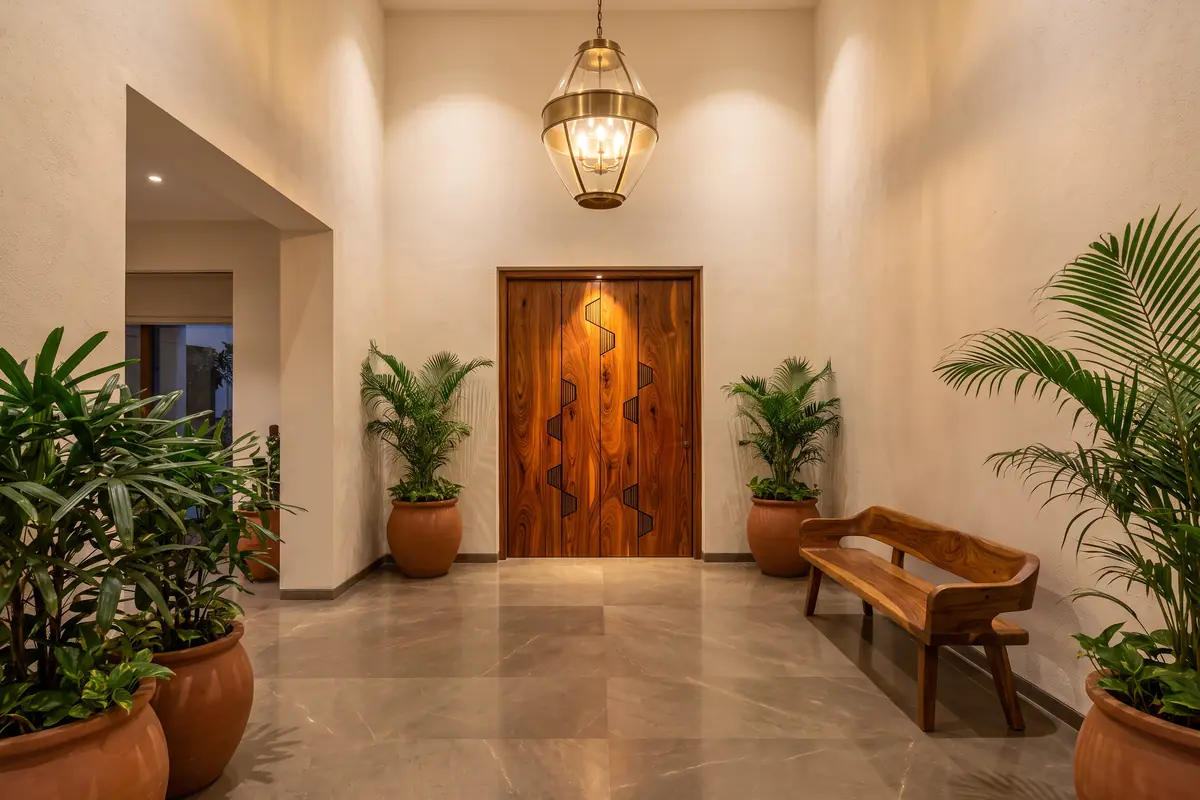
Offices, clinics and hotels often need one finish along a long corridor. Laminate keeps every door identical and easy to clean. Veneer suits a reception area or boardroom, where a few doors are meant to impress.
Rooms with strong afternoon sun suit laminate better, since veneer can change tone over the years. Busy family spaces benefit from the same low-upkeep logic.
Plenty of homes use both finishes. Laminate suits bedrooms and utility rooms, while veneer handles one or two showpiece doors. That mix keeps costs in check and the home looking planned.
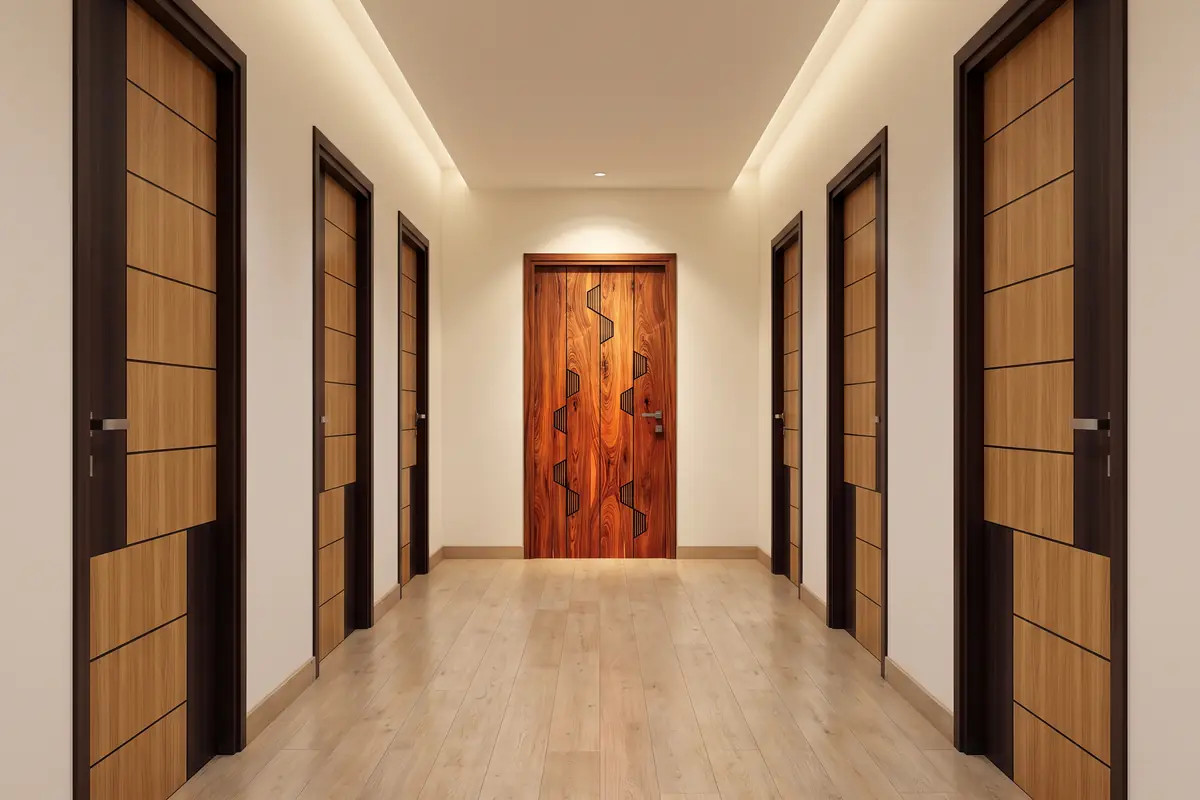
Landlords and builders often lean toward laminate for the same reason, since one finish repeats across many units without surprises.
Bathrooms are the one place neither is ideal. For wet areas, a fully waterproof NFC door is the safer choice — see our guide to NFC doors.
Buyers looking for laminate doors in Bangalore can compare both finishes at a WudGres studio. The same goes across Karnataka, Tamil Nadu, Andhra Pradesh and Goa.
How can you tell laminate and veneer apart?
In a showroom, or when a quote arrives, five quick checks settle it:
- Look along a row of doors.Laminate repeats the exact same pattern; veneer grain shifts from door to door.
- Look for a repeat on one door.A printed pattern sometimes repeats within a single face. Real wood never does.
- Feel the surface.Real veneer has open pores and depth. Even textured laminate feels more uniform.
- Watch the light.Tilt your head: real wood grain shimmers and changes; a print stays flatter.
- Check the design code and spec sheet.Every WudGres door lists its material (laminate or veneer) and series, so there is no guesswork.
What types of laminate doors are worth knowing?
Laminate flush doors are the common base. A flat face on both sides keeps cleaning simple and suits apartments, villas and offices.
Finish splits laminate doors into several looks. Wood-grain laminates copy teak and oak. Plain colours give a calm, modern look, and high-gloss versions bounce light around a room. Dark shades show fingerprints sooner, so match the shade to how the room is used.
Surface texture is another choice buyers face. Smooth laminate wipes clean quickly, while textured laminate feels closer to wood and hides light scratches.
Some doors add grooves, inlays or a two-tone split. These suit modern laminate door designs, where a clean surface carries one bold detail.
Lamorous doors come in 32, 35 and 40 mm thicknesses. The back can carry a membrane film, a plain laminate or a second design, depending on where the door will be seen. WudGres sorts Lamorous into four ranges: Eco sits at the budget end, Elite at the premium end, and Rich and Prime in between.
Ask for the design code when you compare, such as WG 801 or WG 851. That way every supplier quotes the same door, and you avoid comparing two different designs by accident.
Check the size of your opening before you fall for a design. The membrane back option tops out at 87 inches tall and 44 inches wide; check the WudGres size table and ask the team about larger openings.
So which one should you pick?
Four questions settle it for most people: your budget, the room, how much upkeep you will accept, and how much natural grain matters to you.
Which finish suits you? Answer four quick questions
Pick one answer for each. Your suggestion updates as you go.
If the budget is tight, spend it where people look and touch the most. Use laminate for everyday doors and keep veneer for one showpiece. If you are unsure, fit one room first and judge the result before you order the rest.
Pick laminate if you want a finished, easy-care door that matches across the house. Veneer is the better fit if real grain matters and you are happy to polish and care for it. A mixed plan also works, with laminate in most rooms and veneer on a few showpiece doors.
Laminate vs veneer doors: FAQs
Which is better, laminate doors or veneer doors?
Neither wins everywhere. Laminate doors are better for low upkeep, matching sets and busy rooms such as bedrooms, kids' rooms and corridors. Veneer doors are better where real wood grain matters, such as a foyer, living room or reception area. Many homes use laminate for most doors and veneer for one or two showpieces.
Is veneer more expensive than laminate?
Usually, in designer ranges. At WudGres, the Ven Decor Elite and Rich veneer ranges cost clearly more than their Lamorous laminate namesakes. Plain teak veneer is the exception and sits close to laminate in price. Both are priced per square foot.
Which lasts longer, laminate or veneer?
The core decides most of a door's life under either finish. Laminate resists everyday marks better and needs no polish, but a chipped edge cannot be sanded away. Veneer marks more easily but light scratches can be sanded and re-polished, within the limits of a thin wood layer.
Is a veneer door real wood? Is a laminate door real wood?
A veneer door's surface is real wood: a thin slice cut from a log. A laminate door's surface is a factory-printed sheet of paper and resin made to look like wood or a colour. Both are laid over a wood-based core.
Do veneer doors change colour in sunlight?
Yes. Real wood can darken or fade over the years in strong sun, so a UV-resistant polish helps. Laminate keeps its tone more stable, which makes it the safer choice for rooms with strong afternoon sun.
Can laminate doors be polished or refinished?
No. A laminate surface cannot be sanded and re-polished like wood. Small marks can be filled with a colour-matched repair wax, but the finish itself stays as made. Veneer can be lightly sanded and polished again.
Is laminate or veneer better for bedrooms?
Laminate is the strong default for bedrooms and kids' rooms: it wipes clean, shrugs off knocks and matches across the whole floor. Choose a thicker door with a solid core for privacy and quiet.
Is laminate or veneer better for a main door?
WudGres positions its Lamorous laminate doors for interior use. For a sheltered main entrance, a veneer door with a protective, UV-resistant finish makes a warm first impression. For exposed entrances, ask the team which option suits your opening.
Which is better for bathrooms, laminate or veneer?
Neither is ideal. Steam and splashes are hard on any wood-based door. For bathrooms and wet areas, a fully waterproof NFC door is the safer choice.
How can you tell a laminate door from a veneer door?
Look along a row of doors: laminate repeats the same printed pattern, while veneer grain changes from door to door. Up close, real veneer shows open pores and depth; laminate looks even. The surest check is the spec sheet or design code.
Is a mica door laminate or veneer?
A mica or sunmica door is a laminate door. “Mica” is simply the everyday name many people in India use for decorative laminate.
Can I mix laminate and veneer doors in one home?
Yes, and it is often the smartest plan: laminate in bedrooms and utility rooms, veneer on one or two feature doors. Keep the tones related so the home still feels planned.
What should you do next?
Laminate and veneer both make good doors when the core is sound. One gives you a consistent, low-upkeep finish, and the other gives you real wood that asks for a little more care.
Whichever you choose, write down the design code, thickness, back finish and frame. That short note makes quotes easy to compare later.
Compare both in person and ask what sits under the surface. Visit a WudGres studio, browse the catalogue, or use the app to check the exact price at your size. Explore the Lamorous laminate doors, the Ven Decor veneer doors and the Teak Veneer doors.